Friday, February 27, 2009

Manual Laterality for Simple Reaching and Bimanual Coordinated Task in Naturalistic Housed Pan troglodytes

The study of manual lateralization in chimpanzees is today a subject of renewed interest. Currently there is no consensus whether manual dominance does or does not exist at a species level, mainly for wild and semicaptivity populations. The aim of this study was to evaluate the manual laterality in a group of chimpanzees living in an intermediate setting (semicaptivity) through two tasks: one simple and unimanual (simple reaching) and the other complex and bimanual (tube task).


Charly at a tube-task session - Miquel Llorente / IPHES

In simple reaching the hand is used to gather food with precision, and the type of grip and the posture are all evaluated. The tube task evaluates the hand used to extract food from the tube and the method of extraction (digital or instrumental). Through the handedness index we observed that the individuals show clear and strong individual lateralization for both tasks, particularly for the tube task (100%), but also for simple reaching (86%). Anyway, we did not detect population preferences for any of the tasks. However, considering both tasks jointly (multiple evaluation) it has been possible to detect for the first time a skilled manual dominance at the population level in semicaptive chimpanzees.

As a conclusion, our chimpanzee sample displays right handedness at population level when considering multitask values. This is the first time that data on handedness are recorded at population level in a chimpanzee sample living in an intermediate and naturalistic setting. Former researches on hand laterality with the same sample gave negative results (Mosquera et al. 2007), but that study was focused in unimanual and spontaneous tasks. Therefore, results of the current work point to three factors as decisive to force the displaying of hand laterality in chimpanzees: bimanual coordination, tool use, and grip precision.

References cited:
Mosquera, M., Llorente, M., Riba, D., Estebaranz, F., González, M., Lorenzo, C., Sanmartí, N., Toll, M., Carbonell, E., & Feliu, O. (2007). Ethological study of manual laterality in naturalistic housed chimpanzees (Pan troglodytes) from the Mona Foundation Sanctuary (Girona, Spain). Laterality, 12, 19–30.

For more information:

Article "Manual Laterality for Simple Reaching and Bimanual Coordinated Task in Naturalistic Housed Pan troglodytes"

International Journal of Primatology, 30: 183-197.

Contact:

Marina Mosquera

Àrea Prehistoria Universitat Rovira i Virgili de Tarragona - IPHES (Institut Català de Paleoecologia Humana i Evolució Social)

marina.mosquera@urv.cat

Friday, October 24, 2008

Human consumption of tortoises in the Later Middle Pleistocene

Bolomor Cave, located on the southern slope of the Valldigna valley, approximately two kilometres south-east of the town of Tavernes (Valencia, Spain), reveals that tortoise consumption by humans appears to have been common practice in the Later Middle Pleistocene.
The acquisition and consumption of small prey in the pre-Upper Palaeolithic is a highly debated topic at present. For some authors, the systematic obtaining of these animals is only part of the subsistence strategies used by anatomically modern Humans. Several researches consider that the systematic capturing of small prey is more related to the gathering that with the hunting and therefore, the technology required for their obtaining should be more complex and sophisticated (traps, etc.).
However, the consumption of small prey dates back to the Plio-Pleistocene chronologies in some sites. Although the utilization of leporids has been recorded in several pre-Late Pleistocene European sites, the evidence of tortoise consumption is documented not as common for these periods. However, Level IV of Bolomor Cave, dated in Later Middle Pleistocene, has clear diagnostic elements to document the acquisition and use of tortoises (Testudo hermanni) for food.

The scientific research was carried out by Ruth Blasco, collaborator of Area de Prehistoria Universitat Rovira i Virgili of Tarragona (URV) and Institut de Paleoecologia Humana i Evolució Social (IPHES). The results were published in the Journal of Archaeological Science, 35 (2008): 2839-2848.


Cutmarks documented on tortoises at Level IV of Bolomor Cave - Photo: Ruth Blasco
According to Ruth Blasco, the use of tortoises for food appears to be quite common among the hominids that occupied at Level IV of Bolomor Cave. The evidences documented are: (1) cutmarks on limb bones and ventral surface of the carapace and plastron; (2) presence of burning on tortoise skeleton and shell; (3) elements of anthropogenic breakage on carapace and plastron and; (4) human toothmarks on limb bones.

This research show patterns in the tortoise consumption sequence from Level IV of Bolomor Cave and improves data on the butchery process and tortoise consumption in the Late Middle Pleistocene.

Bolomor Cave, apart from providing human fossils, has revealed important discoveries related to the discovery and use of fire. The site provides a stratigraphical sequence of approximately 250,000 years of levels with and without fire and document the evidence oldest of anthropogenic structures of combustion in the Iberian Peninsula and therefore, in the Southern Europe.


For more information

Article “Human consumption of tortoises at Lever IV of Bolomor Cave (Valencia, Spain)”, R. Blasco

Journal of Archaeological Science, 35 (2008): 2839-2848.

Contact


Ruth Blasco

Area de Prehistoria, Universitat Rovira i Virgili de Tarragona - Institut Català Paleocologia Humana i Evolució Social (IPHES)

rblasco@prehistoria.urv.cat

Tuesday, September 23, 2008

Neanderthals at the beach

In two sea caves on the east side of Gibraltar, paleontologists have discovered the remains of marine mammals that they suggest were eaten by Neanderthals. Vanguard and Gorham’s caves were previously known to have been occupied by Neanderthals at least 32,000 years ago.

The scientific research was carried out by a multidisciplinary group of Spanish, British and Gibraltarian scientists, including Dr. Isabel Cáceres member of Universitat Rovira i Virgili of Tarragona (URV) and Institut de Paleoecologia Humana i Evolució Social (IPHES). The results are published in the scientific journal Proceedings of the National Academy of Science of the United States of America.


Some animals showed signs of having the meat stripped by Neanderthals - IPHES / CSIC

The authors identified the remains of fish, mussel shells, and seal bones­ along with the remains of other land animals that Neanderthals hunted and eaten sedimentary layers corresponding to the era when Neanderthals lived in the caves. The findings provide the clearest evidence to date that Neanderthals, like prehistoric humans, actively sought out and consumed animals from the ocean. The researchers show that the bones of some animals from the caves showed signs of having the meat stripped off by stone tools associated with Upper Paleolithic and Mousterian technologies used by Neanderthals. The seal remains are those of juveniles, suggesting the Neanderthals may have actively tracked down the animals at calving season. The sites on Gibraltar show that hunting and gathering of marine animals was a regular, seasonal part of the coastal Neanderthal lifestyle, the authors say.

Until now the scientific community had thought that Homo sapiens was the only human group that had the capacity to take advantage of all natural resources, including marine nutrients. Isabel Cáceres has pointed out that "the exploitation of marine resources in Gibraltar is developed first by Neanderthals and after by Homo sapiens. Both species have similar strategies for hunting and processing the marine resources."

The research shows that the Neanderthals, far from being limited to carnivorous land mammals, had a full knowledge of the environment. This fact allowed them to use all the resources they had at their disposal.

Isabel Cáceres emphasizes: "Since the exploitation of marine resources also encourage a greater territorial stability, we suggest that the survival of Neanderthals until chronologies so late in Gibraltar could be a direct result of good adaptation to the environment (exploitation of marine resources) and, therefore, the success of an economic, social and cultural complex" .


For more information

Article #08-05474: “Neanderthal exploitation of marine mammals in Gibraltar,” C. B. Stringer, J. C. Finlayson, R. N. E. Barton, Y. Fernández-Jalvo, I. Cáceres, R. C. Sabin , E. J. Rhodes, A. P. Currant, J. Rodríguez-Vidal, F. Giles Pacheco, J. A. Riquelme Cantal

Nature, Vol 443. 19 de octubre de 2006

Science, Vol 296. 3 de mayo de 2002

Contact
Isabel Cáceres
Area de Prehistoria, Universitat Rovira i Virgili de Tarragona - IPHES
icaceres@prehistoria.urv.cat

Thursday, August 07, 2008

Amphibians and reptiles from the Gran Dolina cave and the evolution of landscape in Atapuerca

This study deals with the amphibians (newts, toads and frogs) and squamate reptiles (amphisbaenian, lizards and snakes) bone remains proceeding from the 1993-1999 washing-sieving campaigns in the river Arlanzon in Atapuerca. Nearly 5.5 tones of sediment have been processed from the excavation-test of Gran Dolina (levels TD5 to TD10), an excavation realized in order to evaluate the potential of the locality and that furnished the first remains of Homo antecessor in the TD6 level. The material corresponds approximately to 40.000 fossils attributed to 22 taxons (genus and species).


Some drawings of amphibian fossil remains from Gran Dolina, Atapuerca, made by H.-A. Blain. It is a matter of midwife toad, western spadefoot, natterjack toad, european toad and common frog.

This work (based o part of the Ph.D. thesis of the first author) constitutes the first intent to reconstruct past landscape of the Sierra de Atapuerca during the early to middle Pleistocenes using amphibian and aquamate reptile assemblages.

The reconstructed landscape along the sequence of Gran Dolina has been compare with the data from other palaeoenvironmental proxies as small-mammals (rodents, shrews, bats, and rabbits), palynology (pollen and spores) and geomorphology


Meticulous sieving-washing of the excavated sediment in order that no fossil goes unnoticed, small though it was - Jordi Mestre / IPHES


The analyze of the evolution of the biodiversity (taxonomical associations) of reptiles and amphibians during approximately 600.000 years (from 900.000 to 300.000 years) in Gran Dolina has permitted to show that permanent aquatic and humid habitats ever been present in the vicinity of the site. However during the warmest periods, more open and dryer biotopes are best represented, whereas during cold periods humid meadows and woodland are predominant.

From: Blain H.-A., Bailon, S. & Cuenca-Bescós, G. (2008): The Early-Middle Pleistocene palaeoenvironmental change based on the squamate reptile and amphibian proxy at the Gran Dolina site, Atapuerca, Spain. Palaeogeography, Palaeoclimatology, Palaeoecology, 261 (1-2): 177-192.

contact: hablain@prehistoria.urv.cat


Saturday, June 21, 2008

Conservation treatments of human fossil remains

Although research on human evolution depends in many cases on the study of fossil remains that have been treated by conservators, few treatments have been published.

In this article, we present an example of a strict conservation methodology applied to the human mandible ATD6-96, from the site of Gran Dolina (Sierra de Atapuerca, Spain). We describe examination performed before the intervention, which included a the extensive diagnostic computer tomography (CT) scan and stereoscopic light microscopy. The mechanical preparation is also described in detail.


Diagnostic computer tomography (CT) scan - Photo: Jordi Mestre /IPHES


Human mandible ATD6-96 - Credit foto: Jordi Mestre - IPHES

This fossil is treated mainly mechanically, with a scalpel, and some soft brushes and solvents are also used to complete the treatment. Although we use the simplest techniques to prepare a fossil, we state that the technical simplicity does not in any way imply conceptual simplicity: behind the decisions that conservators make there is a work method that involves the knowledge of the material treated, as well as the products and techniques that exist to diagnose the alterations and solve conservation problems.

Through the description of this treatment we show how the interdisciplinary work allowed retention of both the integrity of the specimen and its information. As we think that the boundary between recovering or saving information and losing it is in the recognition of what is valuable, we state that conservation treatments have to be proposed taking into account the needs of the different specialists who partake in the study of the materials.

To sum up, we use the example of the treatment of this human mandible to talk about Conservation methodology and principles and we show how a good treatment needs more than dexterity and patience.

From: López-Polín, L. Ollé, A., Cáceres, I., Carbonell, E., Bermúdez de Castro, J.M. (2008): Pleistocene human remains and conservation treatments: the case of a mandible form Atapuerca (Spain). Journal of Human Evolution, 54 539-545 DOI 10.1016/j.jhevol.2007.07.011

Contact: lucialp@prehistoria.urv.cat

Wednesday, February 27, 2008

The Collapse of Gran Dolina cave, Sierra de Atapuerca


Layer TD10 of Gran Dolina, Atapuerca, during the campaign of excavation


The last hominin occupations of Gran Dolina cave at Atapuerca are represented by layer TD10-1; as stated in the article “The Collapse of Gran Dolina Cave, Sierra de Atapuerca, Spain: Site Formation Processes of Layer TD10-1” which, signed by Carolina Mallol and Eudald Carbonell (IPHES - URV), summarizes the results obtained by a micromorphological study carried out in this layer to reconstruct its formation processes as well as to document possible traces of anthropic activity in the sediments.This layer has yielded high densities of anthropogenic bone and lithic remains that suggest the existence of a referential hominin campsite.


Micromorphological analysis was carried out in order to reconstruct site formation processes and to find traces of hominin activity in the sediments. Results show that TD10-1 is an autochthonous deposit whose components are derived from a local, degraded cave entrance environment. The base of TD10-1 represents a moist, semi-sheltered environment associated with anthropogenic input and low sedimentary rates, while the rest of the deposit represents a non-anthropogenic, more open environment with higher rates of sedimentation. The TD10-1 archaeological assemblages have not undergone long transport or strong postdepositional disturbance. Further interdisciplinary analyses are needed to characterize the types and intensity of the hominin activities recorded in TD10-1.


Archaeological remains mixed wih the sediment of Gran Dolina TD10. Picture: Jordi Mestre – IPHES.

For further information: Carolina Mallol, mallol@mmsh.univ-aix.fr

Thursday, October 11, 2007

Ecological adaptations and tracking climatic changes through time using dental wear analysis

Two studies recent published conduct us to two important conclusions:

- Dental wear reveals to be a better tool to investigate adaptations than tooth morphology, especially for the analysis of samples from Pleistocene localities. Dental wear analysis reveals changes that dental morphology does not detect.

- These studies revealed that fossils are of value in developing an understanding of the dietary breadth and ecological versatility of species that, in recent times, are rare, endangered, and occupy only a small remnant of their former ranges.


Preparation of high-resolution molds in silicone for dental wear analysis


Recreating paleodiets from fossils has often included considerable speculation. Even rigorous studies can sometimes misjudge diet due to phylogenetic constraints in the morphology. In spite of the difficulties, diet aids in interpretation of the habitat and ecological interactions. The indirect evidence from herbivores is sometimes the only indication of plant types in the area, because the fluctuation of herbivore abundance yields insight to the climatic transitions of an area.
The diet of fossil ungulates provides valuable information about the food resources in a given habitat and thus is a useful tool in reconstructing paleohabitats. The dietary interpretation of mammalian teeth has traditionally involved either direct (actualistic) comparison with living animals, the application of general functional principles, or - increasingly during the latest few decades - the study of the wear patterns left on teeth by food.

Using dental wear analysis (mesowear and light stereomicroscopy microwear), various species are used to reconstruct ecological adaptations and to track climatic changes through time.

Groups with a long evolutive history are interesting to analyze changes through time. The project realized on the Antilocapridae (a group endemic to North America) result from a collaboration with Gina M. Semprebon (Professor of Biology and Chair of the Science and Mathematics Department at Bay Path College, USA). All specimens available in the Frick Collection from the American Museum of Natural History (New York) were sampled. Species analyzed spanned from the early Miocene to the late Pleistocene. Results are concordant with well known trends toward increasing aridity and shifts in vegetational structure in the late Miocene–early Pliocene of North America.

Results indicate a shift toward more abrasive diets beginning in the late Miocene and Pliocene, and then a return to a less abrasive dietary regime for the duration of the Pleistocene and into the Recent. More interesting is that the antilocaprines (the more derived group, more hypsodont) apparently depended more on grass than the less advanced merycodontines, but even the earliest of the merycodontines seem to have relied more on grass as a dietary staple than the modern pronghorn. Seasonal grit encroachment on food items encountered by fossil antilocaprids coupled with a heavier reliance on grasses may provide a possible explanation for the extreme hypsodonty present in the modern pronghorn despite its mainly browsing dietary behavior.

From: Semprebon G. M., Rivals F. 2007. Was grass more prevalent in the pronghorn past? An assessment of the dietary adaptations of Miocene to recent Antilocapridae (Mammalia: Artiodactyla). Palaeogeography, Palaeoclimatology, Palaeoecology 253: 332-347.


Populations of caribou

A second study was undertaken on a large sample of modern caribou (Rangifer tarandus) from the Kaminuriak population of eastern Canada. The project is part of a collaboration with Nikos Solounias (Professor at New York College of Osteopathic Medicine and Research Associate at the American Museum of Natural History in New York). The modern sample was compared to fossil specimens from Pleistocene localities in North America (Alaska) and Western Europe (Caune de l’Arago in France and Salzgitter in Germany).

Microwear features on a bovid tooth (magnification x35)


The results show that the extant samples from eastern Canada have seasonal variation in microwear and presumably in diet. Those differences in microwear may reflect a cyclic migration of the population within a year. Rangifer samples from the three fossil localities show that diet of a brachyodont taxon can be highly abrasive, comparable to the diet of modern zebras or plains bison. More over their diet may vary across most of the dietary morphospace of ungulates, indicating an important adaptability of the individuals.

The three Pleistocene samples exhibit microwear that is different from the extant population in question. This observation implies that the recent diet of Rangifer has changed from the typical caribou diet in the past. This indicates dietary change within a species. This is important because it represents dietary evolution without changes in tooth morphology. These results are significant due to climatic deterioration and can be used to detect changes in time and trends in the future of some species as humans alter their habitats.

From: Rivals F., Solounias N. 2007. Differences in tooth microwear of populations of caribou (Rangifer tarandus, Ruminantia, Mammalia) and implications to ecology, migration, glaciations and dental evolution. Journal of Mammalian Evolution 14: 182-192.

For further information: Florent Rivals, florent.rivals@icrea.es


Thursday, September 13, 2007

Bronze Age cannibalism in Atapuerca

Evidence for Bronze Age cannibalism in El Mirador Cave (Sierra de Atapuerca, Burgos, Spain), American Journal of Physical Anthropology, Volume 133, Issue 3, Date: July 2007, Pages: 899-917

Isabel Cáceres, Marina Lozano, Palmira Saladié

Área de Prehistoria de la Universidad Rovira i Virgili de Tarragona, IPHES (Institut de Paleoecologia Humana i Evolució Social), Fundación Atapuerca


During excavations of the Bronze Age levels at El Mirador Cave, a hole containing human remains was found. Taphonomic analysis revealed the existence of cutmarks, human toothmarks, cooking damage, and deliberate breakage in most of the remains recovered, suggesting a clear case of gastronomic cannibalism. The piled distribution of the remains, the uneven skeletal representation, and the chronological difference between the pit and the remains suggest that these bones were subsequently buried by a human group that inhabited into the cave later in time.

Outside Trinchera del Ferrocarril complex and Sima de los Huesos site, El Mirador Cave is located at the southern side of the Sierra de Atapuerca (Burgos, Spain). The Bronze Age remains noticed here appeared in a 6 m2 exploratory excavation. Dating based on charcoal and bone shows that MIR4 corresponds to the Middle Bronze Age. The human remains provide calibrated dates between 4400 and 4100 BP. Dates indicate that the human remains considered here would fit chronologically into the Early Bronze Age.


Dorsal vertebrae exploitation pattern (MIR4-P22-212a and 212b):

cutmarks (arrow) cross both vertebrae as a result of the same

action. Also there are toothmarks on the laminae and peeling

of the spinal process. The articular facets have completely

disappeared
.

The assemblage of human remains recovered from El Mirador Cave consists of 106 specimens belonging to at least six individuals. These remains show evidence of systematical dismemberment, defleshing, and consumption. The distribution of these human remains, with skulls at the bottom and postcranial bones on cranial remains, the abundant bones breakage and the obvious presence of cutmarks, cooking damage, and possible human toothmarks, provide evidences of cannibalistic practices during recent periods of prehistory. All taphonomic alterations on these human remains are anthropogenic in origin. Most incisions indicate that these bodies were defleshed and disarticulated. Cutmarks appear in areas of muscle insertion, following patterns of processing, which are similar in all individuals. Another significant feature of the assemblage is a high degree of bone fragmentation. Analysis of the fracture outline shows a majority to have curved/V-shaped with mixed angles and smooth edges. These features suggest that the breakage occurred while bone was fresh. Human toothmarks in El Mirador Cave are always superficial and small. The size of toothmarks, the presence of peeling associated with toothmarks, crenullated edges on very fragile bones, the similarity with experimental specimens, together with the absence of other modifications, which are typical of carnivores, allow us to propose that in El Mirador Cave, human toothmarks have been identified.

These remains were subject to complex perimortem processing, though it is not possible to determine how the individuals died. The human bodies had been processed similarly to other animals. This processing pattern is similar to that observed in butchered animals from this as well other archaeological sites. There are clear similarities with other archaeological assemblages displaying evidence of nutritional cannibalism, such as published for other sites like Moula-Guercy, Gough’s Cave, Grotte des Perrats, Fontbrégoua, Las Majólicas and the cave of Malalmuerzo or Mancos.

The presence of perimortem cutmarks, human toothmarks, bone breakage, and effect of cooking strongly suggest the existence of Bronze Age gastronomic cannibalism in El Mirador Cave.

To comments icaceres@prehistoria.urv.cat

Wednesday, August 01, 2007

Bos evolution relationships with Acheulean tool technology

The Olduvai buffalo Pelorovis and the origin of Bos. Quaternary Research 68 (2007) 220-226 doi:10.1016/j.yqres.2007.06.002

The origin of the genus Bos is a debated issue. From ~0.5 Ma until historic times, the genus is well known in the Eurasian large mammal assemblages, where it is represented by Bos primigenius. This species has a highly derived cranial anatomy that shows important morphological differences from other Plio-Pleistocene Eurasian genera of the tribe Bovini such as Leptobos, Bison, Proamphibos-Hemibos, and Bubalus. The oldest clear evidence of Bos is the skull fragment ASB-198-1 from the middle Pleistocene (~0.6–0.8 Ma) site of Asbole (Lower Awash Valley, Ethiopia). The first appearance of Bos in Europe is at the site of Venosa-Notarchirico, Italy (~0.5–0.6 Ma). Although the origin of Bos has traditionally been connected with Leptobos and Bison, after a detailed anatomical and morphometric study we propose here a different origin, connecting the middle Pleistocene Eurasian forms of B. primigenius with the African Late Pliocene and early Pleistocene large size member of the tribe Bovini Pelorovis sensu stricto. The dispersal of the Bos lineage in Western Europe during middle Pleistocene times seems to coincide with the arrival of the Acheulean tool technology in this continent.


Bienvenido Martínez


For this analysis, we include the Eastern African Late Pliocene species Pelorovis turkanensis from eastern Africa and P. oldowayensis, recorded in the early Pleistocene of Eastern Africa and the Levantine corridor.

According to the evidence discussed above, we propose a reclassification of the Late Pliocene and early Pleistocene African members of the tribe Bovini ascribed to Pelorovis and the middle Pleistocene–Holocene African and Eurasian specimens ascribed to Bos, including all of them in the genus Bos.

Under this new interpretation, we recognize here three chronospecies: (1) Bos turkanensis for the Late Pliocene African form; (2) Bos oldowayensis for the early Pleistocene form of Africa and the Middle East; and (3) B. primigenius for the Eurasian middle Pleistocene to Holocene form.

The extant representatives of the genus Bos are common animals in human settlements, but now we can suggest that they have been part of the human ecological scenario since the beginning of the genus Homo, during the African Late Pliocene.

Please cite this article as: Martinez-Navarro, B., et al., The Olduvai buffalo Pelorovis and the origin of Bos, Quaternary Research (2007), doi:10.1016/j.yqres.2007.06.002 © 2007 University of Washington. All rights reserved
.

Bienvenido Martínez-Navarro. ICREA, Area de Prehistòria-IPHES, Universitat Rovira i Virgili. Plaça Imperial Tarraco, 1. 43005 Tarragona, Spain
Juan Antonio Pérez-Claros. Departamento de Geología y Ecología (Área de Paleontología), Facultad de Ciencias, Campus Universitario de Teatinos. 29071 Málaga, Spain
Maria Rita Palombo. Department of Earth Sciences, University of Roma “La Sapienza”, and CNR Istituto di Geologia Ambientale e Geoingegneria, Piazzale Aldo Moro 5, 00185 Roma, Italy
Lorenzo Rook. Dipartimento di Scienze della Terra, Università di Firenze, via G. La Pira 4, 50121 Firenze, Italy
Paul Palmqvist. Departamento de Geología y Ecología (Área de Paleontología), Facultad de Ciencias, Campus Universitario de Teatinos. 29071 Málaga, Spain

To comments bienvenido@icrea.es

Friday, June 29, 2007

Found a human tooth dated to ca. 1.2 My in the Sima del Elefante (TE9), Atapuerca

1.2-My-old hominid premolar discovered in the level 9 of the Sima del Elefante. Picture: Jordi Mestre/IPHES.


Last Wednesday, June 27, one P4 was found in the level 9 of the Sima del Elefante, Atapuerca.

“This find occurring within TE9 is very important as it directly proves that there was human presence in the Sierra de Atapuerca at least 1.2 millions of years ago” has been assured by Eudald Carbonell, director of the IPHES and co-director of the Atapuerca Project together with José María Bermúdez de Castro (CENIEH) and Juan Luis Arsuaga (UCM–ISCIII). He has added “In previous years we had found lithic industry which guaranteed this age, but we had never found human remains in the site”.

Along the same lines Rosa Huguet, who defended her doctoral thesis dealing with human occupations in Atapuerca and Orce just few weeks ago at the URV, points out “I already defended in my thesis a hominid presence in Atapuerca 1.2 millions of years ago, but I based it on cut marks observed on faunal remains, which would have been consumed by these hominids, as well as on the documented lithic industry. The fact that this premolar has now been found is a direct evidence which demonstrates the human presence of the Sima del Elefante at that period”.

Exactly, the tooth is a P4, a very well preserved lower premolar which would be ascribed to an adult. Regarding the species to which it could belong, Carbonell has pointed out “We still do not know, but in any case it would be a species previous to Homo antecessor and the direct evidence of hominids in Western Europe would be put back 400,000 years”.

Carbonell has also stated ‘To date it, we have for the moment biostratigraphical data coming from the level where the molar has appeared; the presence of Allophaiomys lavocati indicates us an age older than 1.2 millions of years. Equally, the first palaeomagnetic tests that we have carried out show us reversed polarity

Carbonell has remarked "We must carry out new palaeomagnetic analyses because we are thinking that the dates of this level could be even older than 1.2 millions of years. For the time being, however, the sites located in Atapuerca reinforce its importance as a key place for the study of human evolution, because at several sites (TE9, TD6, TG10, SH) and in a good stratigraphical context we have remains of different hominid species, which are respectively 1,200,000, 800,000 and 500,000 years old.

English version by Fernando Sánchez Trigueros

original version http://www.urv.cat/iphes


Sunday, April 01, 2007

The pre-inscription for the Master Erasmus Mundus of Archaeology from the Quaternary and Human Evolution is open

The first phase of the pre-inscription is already open to access to the Master Erasmus Mundus of Archaeology from the Quaternary and Human Evolution that imparts the University Rovira i Virgili of Tarragona. This first deadline finishes on the 30th April.

This Master started to be imparted in the course 2004-2005, therefore, it arrives already at its fourth year. During course 2006-07 the students (fifteen) of the first promotion finish already and they will have defended their theses of master, in different calendars, and next course they are going to carry out their studies to finish with the doctorate at Tarragona, in the same research team directed by Eudald Carbonell, director of the IPHES (Catalan Institute of Human Paleoecology and Social Evolution) and codirector of the Atapuerca Project in Tarragona.

In total, from the first edition, and during the three first courses, 45 students have followed in Tarragona the classes of this official master. These students are from very diverse origin, and there is as much of the Spanish as of the foreigner, especially people part of research teams that carry out important archaeological excavations like Atapuerca (Burgos-Spain), Dmanisi (Georgia) or Argel (Algeria), among other.

Of this total there are fifteen students from Italy, Ivory Coast, Algeria, Philippines, Indonesia and Jordan that have received the classes in other places, but have come to the URV to develop their projects of research within the framework of this international master.

The Master Erasmus Mundus of Archaeology from the Quaternary and Human Evolution is based in three fundamental areas: the research in human paleo-ecology and prehistory, paleo-anthropology, geology and palaeontology of the Quaternary; the archaeology of intervention in this stage of the evolution, and the management, conservation and socialization of the archaeological patrimony.

This official qualification of the URV share goals and formative activities with the graduations in History and Geography through the objective of introducing to a specialization in archaeology.

Saturday, December 16, 2006

The Neanderthals that 43.000 years ago lived in the Asturian site Sidrón practiced the cannibalism


The prestigious magazine of the Academy of Sciences of the United States, Proceedings of the National Academy of Sciences (PNAS), has published an article about the excavations that are carried out in the Asturian archaeological site El Sidrón where it is confirmed that 43.000 years ago the Neanderthals that lived in this place practiced the cannibalism, because the bones have marks of cut produced by the lithic instruments during the process of disarticulation of the individuals, and also have signals of the knocks carried out to fragment the bones with the aim of obtaining the marrow.


Among the signers of the article, titled "Paleobiology and comparative morphology of in beats Neanderthal sample from El Sidrón, Asturias, Spain", figure Rosa Huguet, who has a scholarship of the Foundation Atapuerca, of the Area of Prehistory of the University Rovira i Virgili of Tarragona, and who also has carried out the zooarchaeological and taphonomical analysis of the human remains found in this site. Therefore, "I have identified and characterized identified and characterized -she assures- the marks of court that make evident the cannibalism, as well as the different activities of disarticulation documented. Besides, the taphonomic study has allowed to see that some remains have been modified for small carnivores and for rodents".


What the researches do not know yet are the exact causes of this cannibalism, a practice that, on the other hand, although with different chronologies and which has been played the lead by different species, has been documented in other archaeological sites as Gran Dolina (Atapuerca, Spain), the cave of Aragon and at Moula-Guercy, both in France, and in Krapina (Croatia). Rosa Huguet comments: "in some of these cases it has been indicated that the cannibalism is gastronomic, but it does not have to be related to periods of stress by the lack of foods, but the hominids might be part of the usual diet of the past inhabitants of the Pleistocene".


The Sidrón is the most important Neanderthals' archaeological site of the Iberian peninsula with regard to the number of bone remains that has been found (more than 1.300), and the only Neanderthal site of the Iberian peninsula of which ADN has been extracted from different hominids.

The scientific works developed in El Sidrón are carried out under the direction of Antonio Rosas, paleoanthropologist of the National Museum of Natural Sciences (CSIC - Consejo Superior de Investigaciones Científicas), and Javier Fortea, from the University of Oviedo, responsible for the archeological part of the site.


Thursday, November 30, 2006

The IPHES gives impulse to a project of research about the first inhabitants of Sicilia


Two investigators of the IPHES (Catalan Institute of Human Paleoecology and Social Evolution, directed by Eudald Carbonell), Andreu Ollé and Josep Maria Vergés, have returned recently from Sicilia where they have been carrying out some prospecting in the province of Palermo, precisely in the Nature Reserve of the Madonie, in the north center of the mentioned country, with the aim of studying the prehistoric settlement of this area. "Sicilia is one of the three possible routes of entry of the first inhabitants, which proceeding from Africa, arrived to Europe. The other two ways that contemplate the scientists are, the most defended, across Asia, and the other access would be Gibraltar", points out Andreu Ollé.


This investigator has assured: "it is documented in Sicilia the presence of inhabitants about 100.000 years ago, but at the same time there are precise findings in other places of the country that would indicate occupations previous to this date". Vergés adds: "data are lacking, because it is not solved how was the arrival of the first hominids in Europe, and since Sicilia is one of the routes to debate, we want to deepen this island in the knowledge of the first inhabitants". In this sense he states: "we talk about Sicilia as a potential entry because it is known that there have been moments in which the sea level has gone down quite a lot, and taking into account that the Sicilian coasts are very near to those of Tunis there is a hypothesis to consider".


This is one of the questions which the IPHES tries to clarify. At the moment, the first prospecting in the Park of the Madonie has put remains of the Superior Paleolithic and some fluvial deposits of the Pleistocene means to the overdraft. Exactly lithic materials, tools of stone, and also some pieces of fauna, as a bone attributed to a species of dwarf elephant have been obtained. Now people will have to deepen in the analyses of these fossils and next year they will go again to carry out another prospecting, and, probably to visit even some other area far from the influence area of this park.


The Park of the Madonie is the object of study of a student, Vincenza Forgia -that we see in the photo among Vergés, behind his, while she talks with Andreu Ollé-. This girl did a stay in the IPHES, in Tarragona, since her doctoral thesis is codirect by Óscar Belvedere, professor of the University of Palermo, which is put in charge of the most methodological aspect of the research, and by Andreu Ollé and Josep Maria Vergés that they advise her in the contents more properly of those remote times, since in this Italian university there are not specialists in prehistory. The participation of the IPHES is also applied within the framework of a project wider of research of this institute that has for goal analyzing the possible contacts between the inhabitants of the north of Africa and the south of Europe those remote times.

Friday, October 13, 2006

The photographic exposition about Archaeology of gender is exhibited at Portugal

“Only there is a thing worse than to arrive at home
after a day of work in the laboratory
and to have the sink with the dishes to wash:
not going to the laboratory”
Chien Shiung Wu (1912-1997)

“Archaeology in key of gender” is the title of the photographic exhibition that until October 31st can still be visited in the Portuguese town Mação, at the Museum of Arte Pré-Histórica e do Sagrado no Vale do Tejo.

The exhibition, sponsored by the Fundación Atapuerca and with the collaboration of the IPHES (Catalonian Institute of Human Paleoecology and Social Evolution, directed by Eudald Carbonell) has been commissariat by Cristina Fernández-Laso and Raquel Platero.


This exhibition, which in February could be seen for the first time in Reus, has been part of the complementary activities of the XV Congress of the International Union of Prehistoric and Protohistoric Sciences (UISPP), that were celebrated in September in Lisbon, Portugal.

This exhibition has for goal to ascertain the work that carry out the women in the projects of research related with the archaeology, with an every time more important presence, overcoming even the men. It is the case of two of the excavations where the IPHES has a very special protagonism: the Abric Romaní (Capellades) where the participation of women already overcomes the 65%, and Atapuerca (Burgos) with more of 52%.

They are scientists of very diverse disciplines (archaeologists, paleontologists, tafonomists, biologists, geographers, topographers, specialists in lithic industry, primatology, archaeozoologists…) that with their knowledge they contribute to the development of the projects of research of the team, and with international projection.

Wednesday, September 27, 2006

The human linguistic capacities could rise something more than one a million years

For the occasion of the recent publication in the magazine Nature of the discovery of a skull of a hominid in Ethiopia belonging to a child of three years, whose antiquity is soared to 3,3 million before the present, Eudald Carbonell and Carlos Lorenzo, members of the team of research of Atapuerca, value the transcendence of this discovery. For the authors, in its ensemble this skull provides basic data for the study of the human evolution and the different adaptations that has entailed (bipedism...), but they are referred especially to the presence of a bone hiodes, the oldest found up to the moment, that would indicate that the capacity to talk of the Australopithecus would be like that of the big apes. For Carbonell and Lorenzo, this information would assure the hypothesis that they have always defended in different scientific publications with regard to the human linguistic capacities being able to rise something more than one million years.

This article was published in the journal El Mundo the 21st of September

The Language of our ancestors

EUDALD CARBONELL Y CARLOS LORENZO

The team directed by the Ethiopian scientist Zeresenay Alemseged has published in Nature the discovery of a skull and other remains of the same skeleton of a hominid who died when he had 3 years. This skeleton found in the region of Dikika, in Ethiopia, has an antiquity of 3,3 millions years and corresponds to the species Australopithecus afarensis (the same species of the undying "Lucy"). The fossils of this child have a fantastic conservation thanks to a very fast burial of his corpse and constitute a discovery of great importance for the studies of human evolution.

In the first place, the discovery of infantile or young individuals of our ancestors allows to know how it was the development and the growth of the hominids 3 million years ago. On occasions the young individuals do not have the same characteristics as the bones of the adult individuals. For example, in the bones of the legs of this skeleton adaptations to the biped locomotion can already be observed. However, in his arms he preserves some primitive characteristics that allowed him to climb up the trees with skill. This combination of characteristics has also been observed in the adult individuals of Australopithecus afarensis, but the interpretation of these features keeps being the object of debate.

Some scientists think that these singularity constitute the evidence of a type of semi-arborescent life, for others they only represent evolutionary heredity that these hominids still preserved. This new skeleton can help to clarify the type of locomotion of the first hominids and which were the first " steps" in the acquisition of our straight posture.

But in our opinion in this study it is important to be highlighted that cleaning the inferior part of the skull of the same skeleton they have found a hyoid bone. This bone of the throat constitutes a key element to reconstruct the linguistic capacities of our ancestors. Up to the date the oldest hyoid that was known had 400.000 years of antiquity and proceeded from the Sima de los Huesos, in the famous highland of Atapuerca. In all the fossil record of the human evolution, another hyoid bone had only been found of one Neanderthal with 60.000 years of antiquity.

That is, the hyoid published now of Australopithecus afarensis constitutes a discovery of enormous importance. The form of this hyoid is very similar to that of the chimpanzees and gorillas and we can therefore say that the capacity to talk about the Australopithecus would be as those of the big apes. This basic feature of the human beings was acquired after the occurrence of our gender Homo, that is after the 2 million years. In fact, from the team of research of Atapuerca we have carried out different scientific publications where our opinion is that the linguistic capacities could rise something more than one a million years and all the species of Homo subsequent to this acquisition have a high degree of complexity.


Friday, September 22, 2006

The prestigious directory Who's Who in the World will include the profile of the professor of the URV Policarp Hortolà


The biologist Policarp Hortolà, researcher and professor of the Area of Prehistory of the University Rovira i Virgili, and also collaborator of the IPHES (Catalan Institute of Human Paleoecology and Social Evolution) (in the center of the image) has been selected to appear in the 24th edition of the directory Who’s Who in the World, which publishes the prestigious North American publishing company Marquis, world leader in the in the field of the biographical directories of the people outstanding in the different areas of the society, and which will be published in November of this year, although it is about a volume corresponding to the year 2007.

Hortolà, which joined the URV as a researcher professor in February 2002, is specialized in the research on the morphology of the erythrocytes (red cells of the blood) in bloodstains, with a prehistoric bias. In this sense he has discovered and systematized the different morphologies of the erythrocytes in mammalian bloodstains, being the founder of the known science as haemotaphonomy.

In the study of human evolution, the identification of bloodstains, for example in a tool, can provide us information about the use of that instrument and about the environment in which the hominids of a specific period have developed, in the same way that is done when the lithic industry contains remains of leaves, fur, etc.

In the directory corresponding to 2007 -which will be available from November of this year- the biographical profile of Dr. Hortolà is included, a privilege that is reserved to those people that have proved exceptional successes in their fields of work and, in consequence, that have contributed significantly to the contemporary society.

One of the most recent publications of professor Hortolà is the book Understanding the science from inside (or at least to try it) (URV Publications), written with Eudald Carbonell, head of department of prehistory at this university, and director of the IPHES (Catalan Institute of Human Paleoecology and Social Evolution).

Brief currículum and biography

Born in Badalona on the 13th of September 1958, Policarp Hortolà has a degree in Biological Sciences through the University of Barcelona, where afterwards he carried out the program of doctorate: Sedimentary record and paleoenvironmental evolution, finally obtaining the doctorate in 2001 in the URV, work by which he was distinguished a year later with the Extraordinary Prize of Doctorate of this University.

He has published a total of 30 articles, in national and international magazines (Catalonia, Spain, Ireland, Poland, Czech Republic, United States, Mexico). Besides the mentioned book he is the author the publication Dating fear racemization of amino acids (Editions of the University of Barcelona, 1998), and also he has collaborated in two more, Picamoixons. A strategic settlement of the last hunters-gatherers (History Museum of Tarragona-Laboratory of Archaeology of the University Rovira i Vrigili, 1992), and Hominids: the first occupations of the continents (Ariel, 2005).

Monday, September 18, 2006

The Neanderthals became extinct at least 4.000 years later than people thought

Why did the Neanderthals become extinct? Until when and where did they live? Which relationships had they had with the anatomically modern humans during the period they have coincided? These ones are some key questions that haven’t been answered yet. A study published this week at the web site of the prestigious magazine Nature, and in which have participated the IPHES (Catalan Institute of Human Paleoecology and Social Evolution) and the Prehistory Area of the University Rovira i Virgili of Tarragona, provides very valuable information about this debate: the excavations carried out at the Cave of Gorham, in Gibraltar, would prove that it was a shelter for the Neanderthals at least 28,000 years ago, about 4000 years later of the date agreed until now to their extinction, and therefore in a very recent period in the long journey of the human evolution.

The datings made at the cave in many different types of sediment have been definitive to conclude this; sediments which have given an antiquity of 33,000 to 23,000 years in the level IV of the stratigraphic sequence. The date validated for the extinction of the Neanderthals, before this study, was about 35,000 years, attending to some discoveries of the archaeological sites of Cesaire and Arcy-sur-Cure, both in France.

The article about the Cave of Gorham published by Nature in its web site, has been signed by 26 authors from 17 different centers of research which work directed by the archaeologist Clive Finlayson, with the objective of obtain a multidisciplinary perspective. The IPHES and the URV take part with two disciplines: taphonomy, which analyses the remains of bones and their process of fossilization, and which is in charge of Isabel Cáceres; and anthracology, which investigates the coals that come from the hearths made by the inhabitants of the cave, and in charge of Ethel Allué. The taphonomy provides information about the behaviour of the Neanderthals in relation with the hunting and the processing of the animal remains recovered in the archaeological site, while the anthracology contributes to know how was the vegetal landscape and the exploitation they made of it.

The lithic industry found at the Cave of Gorham, Gibraltar, with an antiquity of 28,000 years B.P., and possibly of 24,000 years, belongs to the Mousterian culture, with instruments very worked and specialized, attributed to the Neanderthals. These tools belonged to a group of this species which have occupied this cave in a moment of deterioration of the weather, with colder temperatures and with an environment rich and varied of ecological resources (plants and animals). The new research confirms, in consequence, the importance of the Iberian Peninsula as a shelter area for the Neanderthals, when the modern humans (sapiens) were expanded and diversified culturally to other areas of Europe.

The discoveries of Gibraltar allow also recovering the scientific discussion about the fossil of a child, dated in 24,500 years, appeared in Lagar Velho (Portugal) some years ago, and which has been associated to artifacts of the Upper Palaeolithic. This child presents hybrid anatomical characteristics of what could have been a combination of Neanderthal and anatomically modern human, which could suggest the communal life between both species, but the hypothesis received critiques because of the recent date and the extinction of the Neanderthals. The study published by Nature will oblige to review these considerations.

Wednesday, September 13, 2006

An international congress analyses how to obtain more information about mineralized vegetal cells to know more about our past

To identify the vegetal rests that are found in archaeological contexts is very important to obtain information about aspects as diverse as the diet from past populations, their agricultural techniques and, in general, the use that they made of plants, while the identification of these aspects allows us to know how was the landscape in which they developed.

One of the methods that are used for finding it out is the analysis of phytoliths, which are mineralized vegetal cells and which are found, sometimes, during the works of excavation. In order to deepen in this type of analyses from September 12th to 15th, the 6th International Meeting on Phytolith Research will take place in Barcelona, promoted by the ICREA (Catalan Institute of Research in Advanced Studies), being the IPHES (Catalan Institute of Human Paleoecology and Social Evolution) a member of the organizing committee.

The analysis of phytoliths consists on the identification and interpretation of the crystals of silica that are produced in the epidermis of the plants when this mineral has dissolved itself in the water that the plants absorb from the earth. These particles show different forms and keep on the ground when the organic matter of the plant where they were produced has disappeared.

For knowing more about this and the program of the Meeting consult this web site: http://prehistoria.urv.net/6IMPR/

Monday, September 04, 2006

Highligted presence of the IPHES in the international congress of prehistory that is carried out in Lisbon

Researchers, professors and students linked to the IPHES (Catalan Institute of Human Paleoecology and Social Evolution) participate actively in the XV Congress of the International Union of the Prehistoric and Protohistoric Sciences (UISPP), which is developed from the 4 to the 9 september in the University of Lisbon, and of which Luiz Oosterbeek, from the Institute Politechnique of Tomar (Portugal), is the maximum person in charge of the organization. To the Congress they attend scientists worldwide who present and discuss the last investigations in so many specialities of the human evolution like the first occupations in Eurasia, the Rock Art, the emergency of the conscience, the technology, the climatic changes, and the life of the hunter-gatherers, between many other aspects.

The IPHES takes part at the UISPP with different communications, on the part of the researchers with a long trajectory as well as of students of the Erasmus Mundus’ Master of Archaeology of the Quaternary that begin to make public their researches; equally there are students granted to carry out different tasks of support to this organization. Finally, it provides a photographic exposition about the archaeology of gender that some months ago could be seen in Reus.

Among the contributions of Tarragona, we find the intervention in a session that intends to deepen in the knowledge of the first human occupations in Europe, debate moderated by Henry de Lumley, director of the Insitute of Human Paleontology of Paris; the IPHES presents two communications, one on the sequence of the inferior Pleistocene at the site Sima del Elefante in Atapuerca, carried out by Robert Sala, Rosa Huguet, Josep Vallverdu, Alfredo Pérez, Jan var der Made, Gloria Cuenca and Josep Maria Parés, and the other one on the lithic industry of the inferior levels of the sites Cable del Elefante and Gran Dolina, prepared by Eudald Carbonell, Marina Mosquera, Andreu Ollé, Xosé Pedro Rodriguez, Robert Sala and Josep Maria Vergés.

In a workshop dedicated to the European Master Erasmus Mundus in Archaeology of the Quaternary and Human Evolution, organized by Robert Sala, he himself will present the communication “Archaeology of the evolution: a model for a new University”. On the other hand, Gema Chacón, Loli García and Cristina Fernández will do public data on the exploitation of resources from the Neanderthals who occupied the Abric Romaní, at Capellades (Barcelona). Their study proves that those who lived at the levels K and L, of about 52,000 years of antiquity, they moved up to 20 kilometers to obtain everything what they needed.

In addition to these communications, the team of the IPHES contributes also with different posters and communications that treat on diverse thematic around the main archaeological sites where it has excavations, like Atapuerca and Orce.

Thursday, August 31, 2006

Henry de Lumley: “The Abric Romaní is the most important site of the world to reconstruct the life of the Neanderthals”


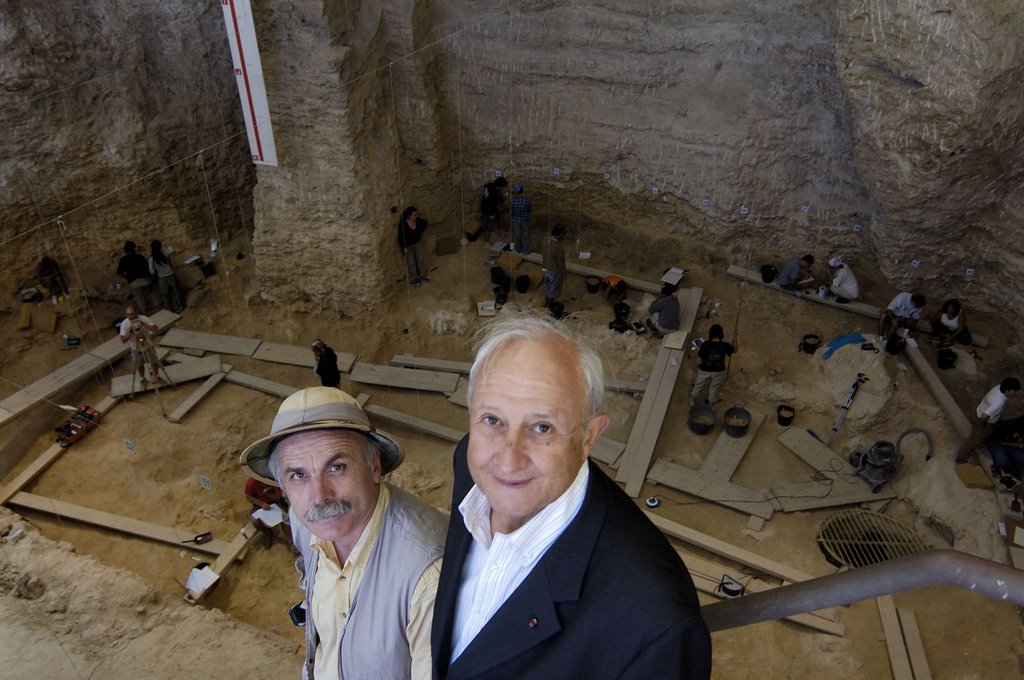
The director of the Institute of Human Paleontology (IPH) at Paris, Henry de Lumley, has declared that the Abric Romaní (Capellades, Barcelona) “is the most important site of the world to reconstruct the life of the Neanderthals”. Lumley, who has been visiting this archaeological site these days when has been discovered a tree carved by this human species 56,000 years ago, asserts that the construction of the next Museum of the Neanderthal at Capellades will be an important key to understand how was the way of life of these hominids, and will place this locality into the net of the cultural spaces of Europe about the route that these populations have traveled.

Lumley, motivated by the numerous and qualified team that works at the Abric Romaní, headed by the IPHES (Institute of Human Paleoecology and Social Evolution) and directed by Eudald Carbonell, has affirmed: “it is an exceptional site because of the special conditions which offers to the preservation of the fossils remains like the hearths and the wood tools.” This excellent preservation is determined by the abundance of calcic bicarbonate in the water of Capellades. The water that flows from the sources recovers the vegetable surface and fossilizes their external part; in this way when the woody material disappears the imprint of it remains.

The director of the IPH of Paris has noticed: “all that allows us to find out how the Neanderthals organized their camps, and reproduce, therefore, the daily scenes.” Lumley has insisted that “for the first time their system of organization can be understood.” And he has added: “there is another interesting aspect, which is that observing how they divide up the structures as the hearths, we can obtain demographical data on these populations. In the Romaní there is central fire (hearth) and many others individual, from here it could be tried to calculate how many people would occupy this space.”

Henry de Lumley has referred also to the trunk of tree located some days ago, and which has 56,000 years of antiquity: “it is an interesting discovery because for the first time we can know how was the system to carve the wood the Neanderthals used.” These groups used the wood to obtain fire, but also to make tools for the hunting, the gathering and for the domestic use.

At the same time, Lumley assures that we can conclude from the set of all these singularities of the Abric Romaní, that the Neanderthals had a complex organization, because they distributed the spaces according to its functionality: to sleep, for meeting around the fire, to cut the tools, etc.


Finally, with regard to the future construction of the Museum of the Neanderthals in Capellades, Henry de Lumley has noticed: “it will be an enclosure where no human remains will be exhibited, because in the Abric Romaní they have not been discovered yet, but will situate this archaeological site in a very important place in the network of European cultural spaces, like Tautavel (remains of 300,000 years) or Lascaux (450,000 years), both in France. Among all of them the route of the prehistoric man will be able to be followed.”

The mayor of Capellades, Angel Soteras, has assured: “the Museum of the Neanderthal will be inaugurated in the year 2009, coinciding with the first centennial of the discover of the Abric Romaní and the beginning of the first excavation.” Raül Bartroli, technician of archaeological heritage of the Town Council of Capellades has added: “the museum will be centered in showing how was the life of these populations about two central elements that give prestige and fame to the archaeological site: the hearths and the wood, as technologies that convey the social life.”

For the mayor, this museum “will revitalize a lot the village, and will have a national cultural equipment for the value of the discoveries. Every one who wants to know the Neanderthals will have to go to Capellades.” This Museum will be constructed in a new building and will be a complement of the Prehistoric Park of Capellades which includes the Abric Romaní and all the rest of archaeological sites that are part of the Capelló.