Wednesday, September 27, 2006

The human linguistic capacities could rise something more than one a million years

For the occasion of the recent publication in the magazine Nature of the discovery of a skull of a hominid in Ethiopia belonging to a child of three years, whose antiquity is soared to 3,3 million before the present, Eudald Carbonell and Carlos Lorenzo, members of the team of research of Atapuerca, value the transcendence of this discovery. For the authors, in its ensemble this skull provides basic data for the study of the human evolution and the different adaptations that has entailed (bipedism...), but they are referred especially to the presence of a bone hiodes, the oldest found up to the moment, that would indicate that the capacity to talk of the Australopithecus would be like that of the big apes. For Carbonell and Lorenzo, this information would assure the hypothesis that they have always defended in different scientific publications with regard to the human linguistic capacities being able to rise something more than one million years.

This article was published in the journal El Mundo the 21st of September

The Language of our ancestors

EUDALD CARBONELL Y CARLOS LORENZO

The team directed by the Ethiopian scientist Zeresenay Alemseged has published in Nature the discovery of a skull and other remains of the same skeleton of a hominid who died when he had 3 years. This skeleton found in the region of Dikika, in Ethiopia, has an antiquity of 3,3 millions years and corresponds to the species Australopithecus afarensis (the same species of the undying "Lucy"). The fossils of this child have a fantastic conservation thanks to a very fast burial of his corpse and constitute a discovery of great importance for the studies of human evolution.

In the first place, the discovery of infantile or young individuals of our ancestors allows to know how it was the development and the growth of the hominids 3 million years ago. On occasions the young individuals do not have the same characteristics as the bones of the adult individuals. For example, in the bones of the legs of this skeleton adaptations to the biped locomotion can already be observed. However, in his arms he preserves some primitive characteristics that allowed him to climb up the trees with skill. This combination of characteristics has also been observed in the adult individuals of Australopithecus afarensis, but the interpretation of these features keeps being the object of debate.

Some scientists think that these singularity constitute the evidence of a type of semi-arborescent life, for others they only represent evolutionary heredity that these hominids still preserved. This new skeleton can help to clarify the type of locomotion of the first hominids and which were the first " steps" in the acquisition of our straight posture.

But in our opinion in this study it is important to be highlighted that cleaning the inferior part of the skull of the same skeleton they have found a hyoid bone. This bone of the throat constitutes a key element to reconstruct the linguistic capacities of our ancestors. Up to the date the oldest hyoid that was known had 400.000 years of antiquity and proceeded from the Sima de los Huesos, in the famous highland of Atapuerca. In all the fossil record of the human evolution, another hyoid bone had only been found of one Neanderthal with 60.000 years of antiquity.

That is, the hyoid published now of Australopithecus afarensis constitutes a discovery of enormous importance. The form of this hyoid is very similar to that of the chimpanzees and gorillas and we can therefore say that the capacity to talk about the Australopithecus would be as those of the big apes. This basic feature of the human beings was acquired after the occurrence of our gender Homo, that is after the 2 million years. In fact, from the team of research of Atapuerca we have carried out different scientific publications where our opinion is that the linguistic capacities could rise something more than one a million years and all the species of Homo subsequent to this acquisition have a high degree of complexity.


Friday, September 22, 2006

The prestigious directory Who's Who in the World will include the profile of the professor of the URV Policarp Hortolà


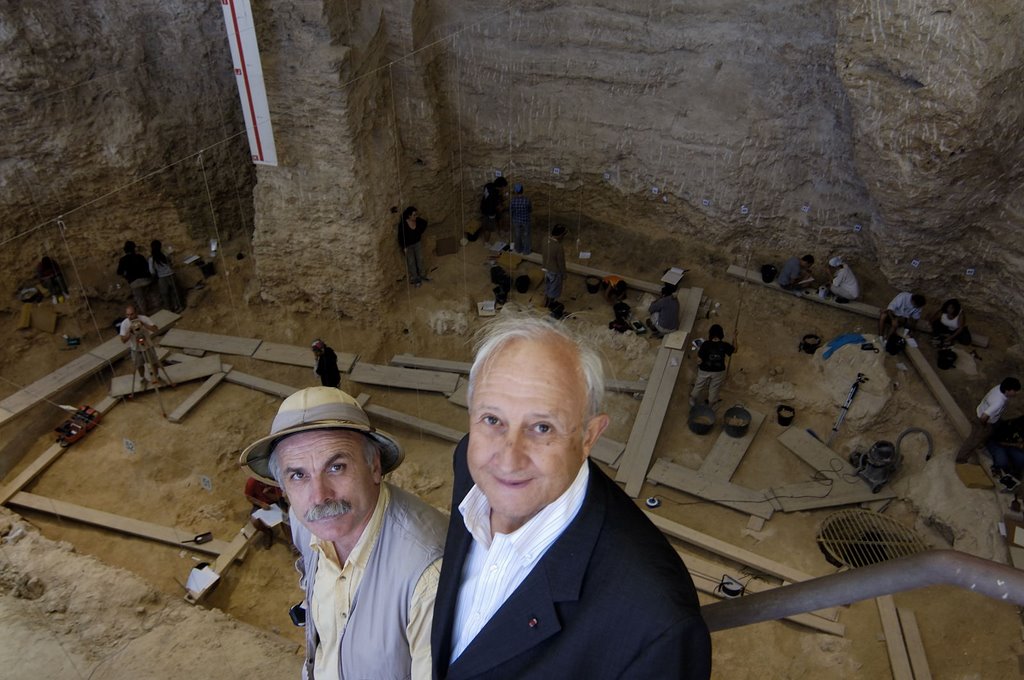
The biologist Policarp Hortolà, researcher and professor of the Area of Prehistory of the University Rovira i Virgili, and also collaborator of the IPHES (Catalan Institute of Human Paleoecology and Social Evolution) (in the center of the image) has been selected to appear in the 24th edition of the directory Who’s Who in the World, which publishes the prestigious North American publishing company Marquis, world leader in the in the field of the biographical directories of the people outstanding in the different areas of the society, and which will be published in November of this year, although it is about a volume corresponding to the year 2007.

Hortolà, which joined the URV as a researcher professor in February 2002, is specialized in the research on the morphology of the erythrocytes (red cells of the blood) in bloodstains, with a prehistoric bias. In this sense he has discovered and systematized the different morphologies of the erythrocytes in mammalian bloodstains, being the founder of the known science as haemotaphonomy.

In the study of human evolution, the identification of bloodstains, for example in a tool, can provide us information about the use of that instrument and about the environment in which the hominids of a specific period have developed, in the same way that is done when the lithic industry contains remains of leaves, fur, etc.

In the directory corresponding to 2007 -which will be available from November of this year- the biographical profile of Dr. Hortolà is included, a privilege that is reserved to those people that have proved exceptional successes in their fields of work and, in consequence, that have contributed significantly to the contemporary society.

One of the most recent publications of professor Hortolà is the book Understanding the science from inside (or at least to try it) (URV Publications), written with Eudald Carbonell, head of department of prehistory at this university, and director of the IPHES (Catalan Institute of Human Paleoecology and Social Evolution).

Brief currículum and biography

Born in Badalona on the 13th of September 1958, Policarp Hortolà has a degree in Biological Sciences through the University of Barcelona, where afterwards he carried out the program of doctorate: Sedimentary record and paleoenvironmental evolution, finally obtaining the doctorate in 2001 in the URV, work by which he was distinguished a year later with the Extraordinary Prize of Doctorate of this University.

He has published a total of 30 articles, in national and international magazines (Catalonia, Spain, Ireland, Poland, Czech Republic, United States, Mexico). Besides the mentioned book he is the author the publication Dating fear racemization of amino acids (Editions of the University of Barcelona, 1998), and also he has collaborated in two more, Picamoixons. A strategic settlement of the last hunters-gatherers (History Museum of Tarragona-Laboratory of Archaeology of the University Rovira i Vrigili, 1992), and Hominids: the first occupations of the continents (Ariel, 2005).

Monday, September 18, 2006

The Neanderthals became extinct at least 4.000 years later than people thought

Why did the Neanderthals become extinct? Until when and where did they live? Which relationships had they had with the anatomically modern humans during the period they have coincided? These ones are some key questions that haven’t been answered yet. A study published this week at the web site of the prestigious magazine Nature, and in which have participated the IPHES (Catalan Institute of Human Paleoecology and Social Evolution) and the Prehistory Area of the University Rovira i Virgili of Tarragona, provides very valuable information about this debate: the excavations carried out at the Cave of Gorham, in Gibraltar, would prove that it was a shelter for the Neanderthals at least 28,000 years ago, about 4000 years later of the date agreed until now to their extinction, and therefore in a very recent period in the long journey of the human evolution.

The datings made at the cave in many different types of sediment have been definitive to conclude this; sediments which have given an antiquity of 33,000 to 23,000 years in the level IV of the stratigraphic sequence. The date validated for the extinction of the Neanderthals, before this study, was about 35,000 years, attending to some discoveries of the archaeological sites of Cesaire and Arcy-sur-Cure, both in France.

The article about the Cave of Gorham published by Nature in its web site, has been signed by 26 authors from 17 different centers of research which work directed by the archaeologist Clive Finlayson, with the objective of obtain a multidisciplinary perspective. The IPHES and the URV take part with two disciplines: taphonomy, which analyses the remains of bones and their process of fossilization, and which is in charge of Isabel Cáceres; and anthracology, which investigates the coals that come from the hearths made by the inhabitants of the cave, and in charge of Ethel Allué. The taphonomy provides information about the behaviour of the Neanderthals in relation with the hunting and the processing of the animal remains recovered in the archaeological site, while the anthracology contributes to know how was the vegetal landscape and the exploitation they made of it.

The lithic industry found at the Cave of Gorham, Gibraltar, with an antiquity of 28,000 years B.P., and possibly of 24,000 years, belongs to the Mousterian culture, with instruments very worked and specialized, attributed to the Neanderthals. These tools belonged to a group of this species which have occupied this cave in a moment of deterioration of the weather, with colder temperatures and with an environment rich and varied of ecological resources (plants and animals). The new research confirms, in consequence, the importance of the Iberian Peninsula as a shelter area for the Neanderthals, when the modern humans (sapiens) were expanded and diversified culturally to other areas of Europe.

The discoveries of Gibraltar allow also recovering the scientific discussion about the fossil of a child, dated in 24,500 years, appeared in Lagar Velho (Portugal) some years ago, and which has been associated to artifacts of the Upper Palaeolithic. This child presents hybrid anatomical characteristics of what could have been a combination of Neanderthal and anatomically modern human, which could suggest the communal life between both species, but the hypothesis received critiques because of the recent date and the extinction of the Neanderthals. The study published by Nature will oblige to review these considerations.

Wednesday, September 13, 2006

An international congress analyses how to obtain more information about mineralized vegetal cells to know more about our past

To identify the vegetal rests that are found in archaeological contexts is very important to obtain information about aspects as diverse as the diet from past populations, their agricultural techniques and, in general, the use that they made of plants, while the identification of these aspects allows us to know how was the landscape in which they developed.

One of the methods that are used for finding it out is the analysis of phytoliths, which are mineralized vegetal cells and which are found, sometimes, during the works of excavation. In order to deepen in this type of analyses from September 12th to 15th, the 6th International Meeting on Phytolith Research will take place in Barcelona, promoted by the ICREA (Catalan Institute of Research in Advanced Studies), being the IPHES (Catalan Institute of Human Paleoecology and Social Evolution) a member of the organizing committee.

The analysis of phytoliths consists on the identification and interpretation of the crystals of silica that are produced in the epidermis of the plants when this mineral has dissolved itself in the water that the plants absorb from the earth. These particles show different forms and keep on the ground when the organic matter of the plant where they were produced has disappeared.

For knowing more about this and the program of the Meeting consult this web site: http://prehistoria.urv.net/6IMPR/

Monday, September 04, 2006

Highligted presence of the IPHES in the international congress of prehistory that is carried out in Lisbon

Researchers, professors and students linked to the IPHES (Catalan Institute of Human Paleoecology and Social Evolution) participate actively in the XV Congress of the International Union of the Prehistoric and Protohistoric Sciences (UISPP), which is developed from the 4 to the 9 september in the University of Lisbon, and of which Luiz Oosterbeek, from the Institute Politechnique of Tomar (Portugal), is the maximum person in charge of the organization. To the Congress they attend scientists worldwide who present and discuss the last investigations in so many specialities of the human evolution like the first occupations in Eurasia, the Rock Art, the emergency of the conscience, the technology, the climatic changes, and the life of the hunter-gatherers, between many other aspects.

The IPHES takes part at the UISPP with different communications, on the part of the researchers with a long trajectory as well as of students of the Erasmus Mundus’ Master of Archaeology of the Quaternary that begin to make public their researches; equally there are students granted to carry out different tasks of support to this organization. Finally, it provides a photographic exposition about the archaeology of gender that some months ago could be seen in Reus.

Among the contributions of Tarragona, we find the intervention in a session that intends to deepen in the knowledge of the first human occupations in Europe, debate moderated by Henry de Lumley, director of the Insitute of Human Paleontology of Paris; the IPHES presents two communications, one on the sequence of the inferior Pleistocene at the site Sima del Elefante in Atapuerca, carried out by Robert Sala, Rosa Huguet, Josep Vallverdu, Alfredo Pérez, Jan var der Made, Gloria Cuenca and Josep Maria Parés, and the other one on the lithic industry of the inferior levels of the sites Cable del Elefante and Gran Dolina, prepared by Eudald Carbonell, Marina Mosquera, Andreu Ollé, Xosé Pedro Rodriguez, Robert Sala and Josep Maria Vergés.

In a workshop dedicated to the European Master Erasmus Mundus in Archaeology of the Quaternary and Human Evolution, organized by Robert Sala, he himself will present the communication “Archaeology of the evolution: a model for a new University”. On the other hand, Gema Chacón, Loli García and Cristina Fernández will do public data on the exploitation of resources from the Neanderthals who occupied the Abric Romaní, at Capellades (Barcelona). Their study proves that those who lived at the levels K and L, of about 52,000 years of antiquity, they moved up to 20 kilometers to obtain everything what they needed.

In addition to these communications, the team of the IPHES contributes also with different posters and communications that treat on diverse thematic around the main archaeological sites where it has excavations, like Atapuerca and Orce.

Thursday, August 31, 2006

Henry de Lumley: “The Abric Romaní is the most important site of the world to reconstruct the life of the Neanderthals”


The director of the Institute of Human Paleontology (IPH) at Paris, Henry de Lumley, has declared that the Abric Romaní (Capellades, Barcelona) “is the most important site of the world to reconstruct the life of the Neanderthals”. Lumley, who has been visiting this archaeological site these days when has been discovered a tree carved by this human species 56,000 years ago, asserts that the construction of the next Museum of the Neanderthal at Capellades will be an important key to understand how was the way of life of these hominids, and will place this locality into the net of the cultural spaces of Europe about the route that these populations have traveled.

Lumley, motivated by the numerous and qualified team that works at the Abric Romaní, headed by the IPHES (Institute of Human Paleoecology and Social Evolution) and directed by Eudald Carbonell, has affirmed: “it is an exceptional site because of the special conditions which offers to the preservation of the fossils remains like the hearths and the wood tools.” This excellent preservation is determined by the abundance of calcic bicarbonate in the water of Capellades. The water that flows from the sources recovers the vegetable surface and fossilizes their external part; in this way when the woody material disappears the imprint of it remains.

The director of the IPH of Paris has noticed: “all that allows us to find out how the Neanderthals organized their camps, and reproduce, therefore, the daily scenes.” Lumley has insisted that “for the first time their system of organization can be understood.” And he has added: “there is another interesting aspect, which is that observing how they divide up the structures as the hearths, we can obtain demographical data on these populations. In the Romaní there is central fire (hearth) and many others individual, from here it could be tried to calculate how many people would occupy this space.”

Henry de Lumley has referred also to the trunk of tree located some days ago, and which has 56,000 years of antiquity: “it is an interesting discovery because for the first time we can know how was the system to carve the wood the Neanderthals used.” These groups used the wood to obtain fire, but also to make tools for the hunting, the gathering and for the domestic use.

At the same time, Lumley assures that we can conclude from the set of all these singularities of the Abric Romaní, that the Neanderthals had a complex organization, because they distributed the spaces according to its functionality: to sleep, for meeting around the fire, to cut the tools, etc.


Finally, with regard to the future construction of the Museum of the Neanderthals in Capellades, Henry de Lumley has noticed: “it will be an enclosure where no human remains will be exhibited, because in the Abric Romaní they have not been discovered yet, but will situate this archaeological site in a very important place in the network of European cultural spaces, like Tautavel (remains of 300,000 years) or Lascaux (450,000 years), both in France. Among all of them the route of the prehistoric man will be able to be followed.”

The mayor of Capellades, Angel Soteras, has assured: “the Museum of the Neanderthal will be inaugurated in the year 2009, coinciding with the first centennial of the discover of the Abric Romaní and the beginning of the first excavation.” Raül Bartroli, technician of archaeological heritage of the Town Council of Capellades has added: “the museum will be centered in showing how was the life of these populations about two central elements that give prestige and fame to the archaeological site: the hearths and the wood, as technologies that convey the social life.”

For the mayor, this museum “will revitalize a lot the village, and will have a national cultural equipment for the value of the discoveries. Every one who wants to know the Neanderthals will have to go to Capellades.” This Museum will be constructed in a new building and will be a complement of the Prehistoric Park of Capellades which includes the Abric Romaní and all the rest of archaeological sites that are part of the Capelló.

Tuesday, August 29, 2006

The IPHES carries out an archaeological exploration in Morocco to locate remains of two million years of antiquity

The Institute of Human Paleoecology and Social Evolution (IPHES), in collaboration with the University of Ujda (Morocco) and the University of Burgos (Spain) carries out explorations in the mentioned African country to locate archaeological remains of two million years which contribute to the study of the human evolution. The project is codirected by the professors Robert Sala (Universitat Rovira I Virgili at Tarragona) and Hassan Auraghe, from Ujda, and it is framed in the joint tasks that impel this two institutions to socialize the research.

Robert Sala points out: “at present we develop a research project in Algeria, but the idea is to extend our field of action to other countries of the African continent in order to obtain a regional vision of the human settlement.” In the area of the locality of Ujda have been located packets of sediment of two million years and now it is intended to find the archaeological remains inside a stratigraphy (in chronological sequence) to deepen in their knowledge.

Sala assures: “we consider that this one is a rich area of the Mediterranean, because already there have been findings in the surface, but it is still little explored”. Until now no step had been given to systematize a serious research with regard to the Quaternary in this geographical area.

After these explorations, which are useful to assure the validity of the project, we will proceed to complete this intervention with others of the same type, or directly to execute an excavation possibly the spring of 2007, according to the results that we obtain these days. In a third phase, the initiatives properly said of socialization will be carried out.

Wednesday, August 23, 2006

Found for the first time a tree cut by Neanderthals 56,000 years ago at the Abric Romaní, Capellades, Barcelona


56,000 years ago the Neanderthals that occupied the Abric Romaní, at Capellades (Barcelona), made use of the forest mass that grew in the edge of the shelter. Remains of trees cut by these hominids have been fossilized in the level P, being the one of larger diameter of 40 centimeters; whereas the base of the trunk, of a meter of height, remains in vertical position, the branches are scattered surrounding. The Neanderthals used wood to make fire and also to make tools for the hunt, the gathering and the domestic use. These archaeological remains are the most ancient ever found at this shelter, where they have been found fossilized plants from the 40,000 to 70,000 years.

This discovery confirms the importance that had fire and plants for the Neanderthals to their domestic activities, associated to workshops of manipulation of the wood. The Abric Romaní is the most important archaeological site in the world with wood tools and hearths excavated in the last 25 years. Until the moment it has been investigated more than 300 hearths and has been located more than 100 of wood tools from 40,000 to 56,000 years.

The plant preservation at this site is caused by the abundance of calcic bicarbonate in the water at Capellades. The water that flows from the sources covers the plant surfaces that fossilize the external part of them. In this way, when the woody material disappears, its imprint remains. Constructing a mold over this negative we could obtain a positive of it that allows us to know the original form of its structure.

The excellent preservation of fossils at this site (wood, stone and bone) makes easier the approximate reconstruction of the last Neanderthals’ life before their extinction. Specifically, this discovery allows us to confirm the complexity of the Neanderthal behaviour, which has been often put in doubt by some scientists.

Tuesday, August 22, 2006

Presentation


We make for you this virtual space with the objective to share with the maximum number of people the knowledge that we are obtaining with our research. With this blog the scientific team headed by Eudald Carbonell, director of the IPHES (Institute of Human Paleoecology and Social Evolution), professor of Prehistory at the University Rovira i Virgili at Tarragona, and codirector of the Atapuerca Project, we wish to update you of our activities, and we hope this will help you to think on our species and our commitment with the society. This is what we have been trying to do for many years with the socialization of science.

Blog maintained originally in catalan by Cinta S. Bellmunt, journalist and student of the European Master on Archaeology of the Quaternay and Human Evolution of the URV, and adapted to english with the translation of Almudena L. Benito, student of the same Master.